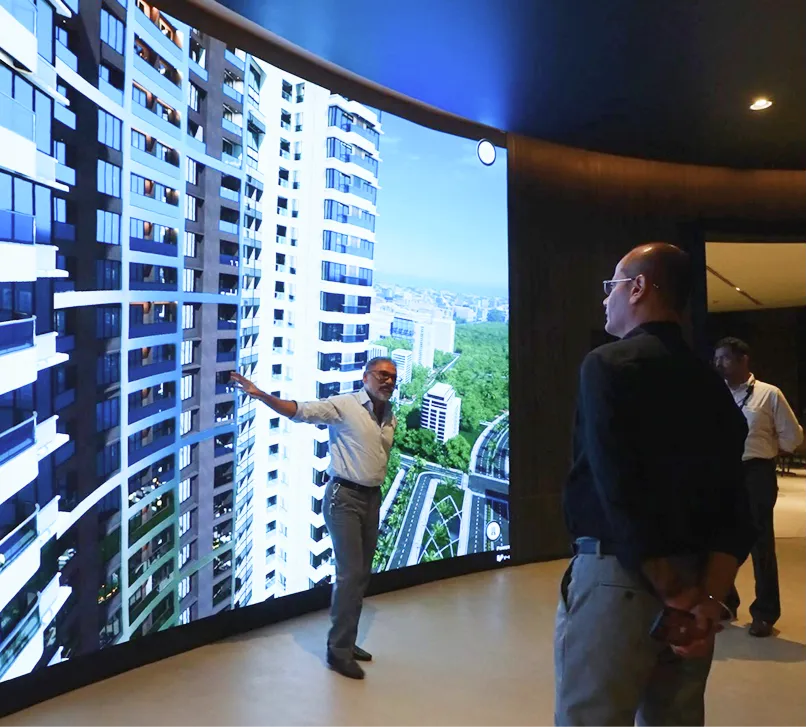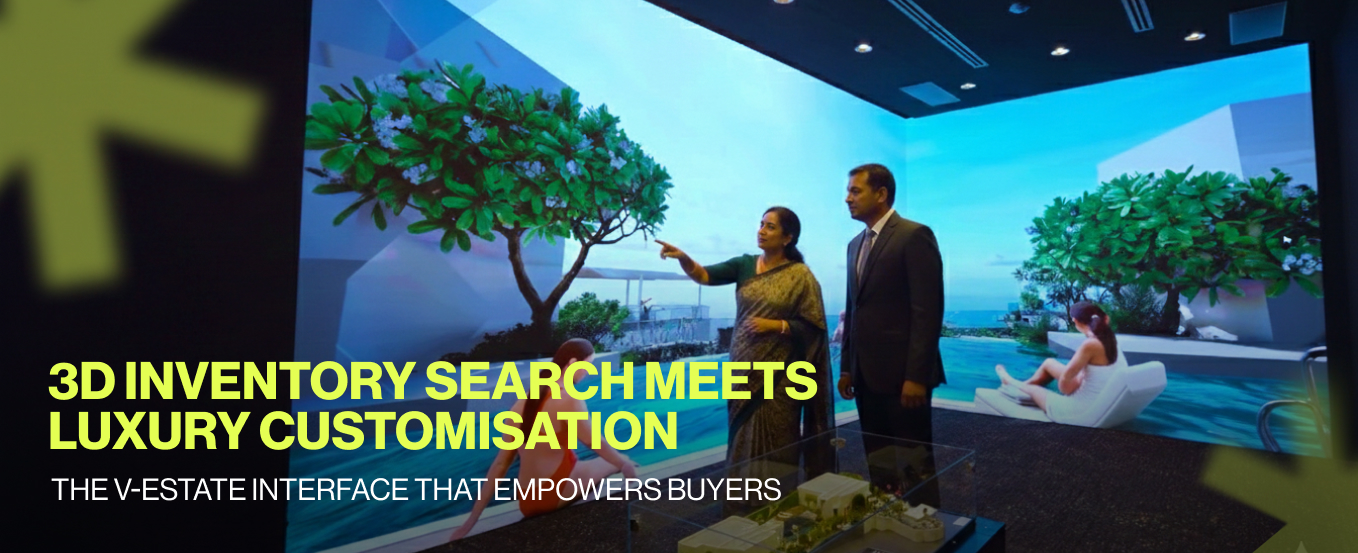
Buyers today demand control. They no longer accept generic property brochures or rushed site visits. Marketing teams in luxury segments face a critical challenge: demonstrating properties in ways that match buyer expectations for precision and personalization.
The gap is measurable. Traditional presentations lack depth on critical details—window views at different hours, lighting conditions, spatial proportions with specific furnishings. Developers lose qualified leads when buyers cannot visualize ownership scenarios. Conversion rates drop 30-40% in high-end markets without interactive property previews.
Offline tools solve this friction. On-site activations at showrooms, events, and sales galleries require technology that performs without internet dependency. V-Estate operates locally—deployed on tablets or kiosks with no Wi-Fi requirements. This shifts the buying experience from passive viewing to active exploration.
The Core Problem: Inventory Search and Customization Disconnect
Current workflows create delays. Buyers navigate static image galleries. Sales reps explain floor plans verbally. Customization discussions happen separately, often requiring 3D renderers or follow-up consultations. Each step extends the sales cycle.
Lead decay accelerates during friction points. A buyer interested in unit specifications cannot immediately visualize how their preferred paint color, flooring, or furniture scale within that specific space. They cannot test how natural light at 6 PM affects their evening comfort. These gaps compound into delayed decisions and lost prospects.
Developers cannot track buyer preferences at scale. Without capture mechanisms during showroom interactions, marketing teams lack data on which customizations drive engagement or which unit configurations generate interest.
Photorealistic 3D Virtual Show Flats: Precise Property Representation
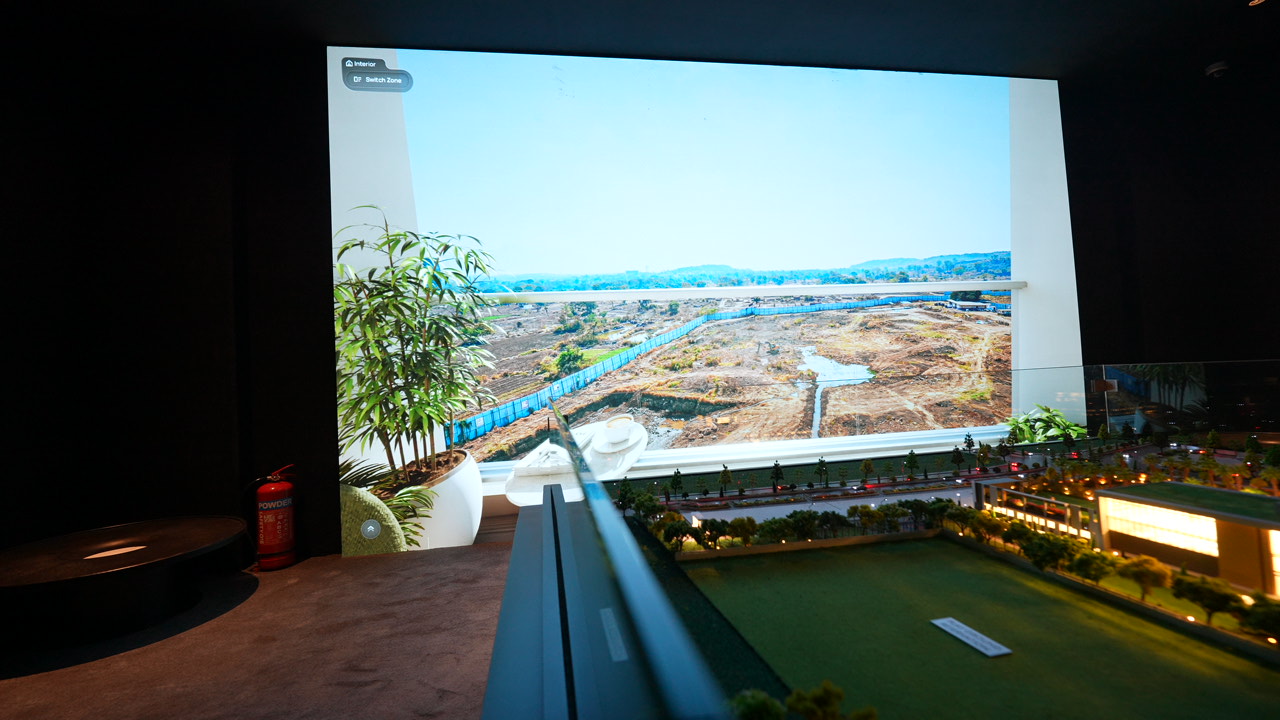
V-Estate renders properties with exact architectural and spatial accuracy. Buyers see their future unit—not imagined, but calculated. Window views display actual exterior scenes matched to orientation and floor height. Minute details register immediately—how sunlight enters at 7 AM, how the balcony frames the neighborhood, how traffic patterns appear from different vantage points.
Lighting behaves realistically. Morning diffusion differs from afternoon glare differs from evening golden hour. Buyers experience the property across temporal scenarios without leaving the showroom. This precision eliminates mental gaps and builds confidence in purchase decisions.
Scale becomes tangible. Furniture placement shows actual proportions in the space. A sofa's dimension against a wall. Counter space in the kitchen. Hallway width. Buyers assess functional living—not abstract measurements.
Integrated 3D Inventory Search: Instant Filtering Without Friction
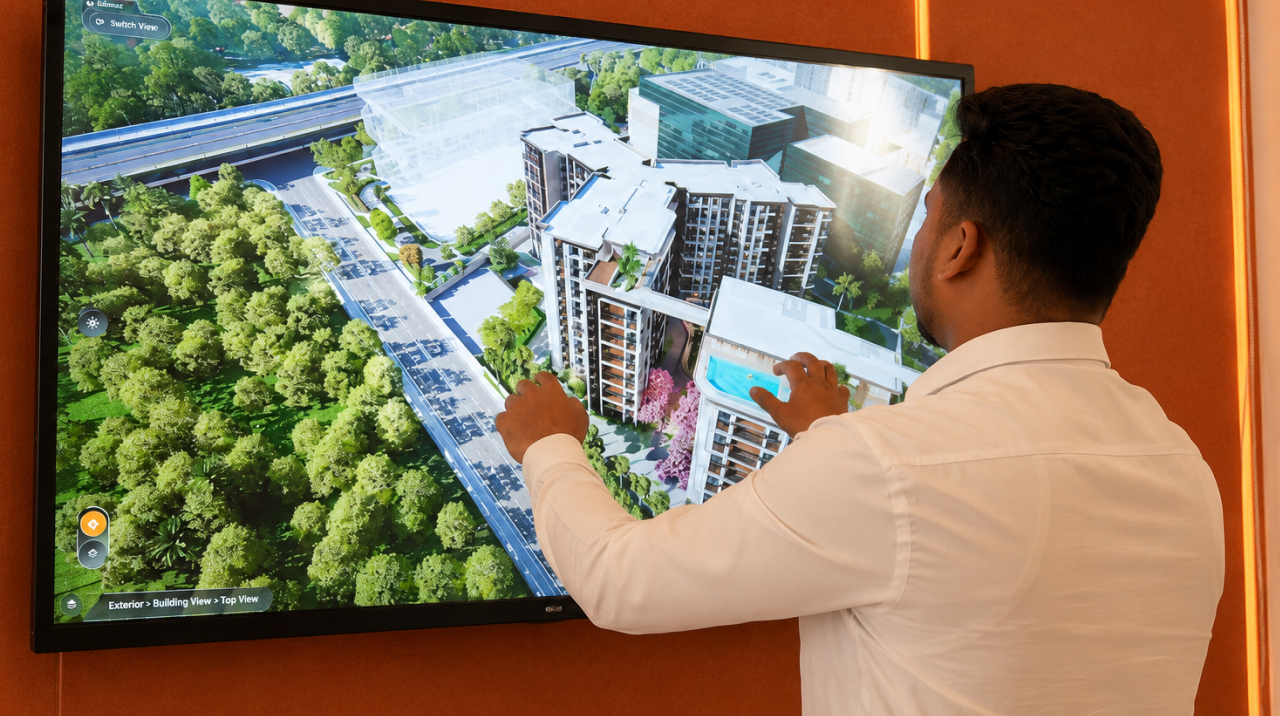
Buyers filter by priority criteria—size, floor, orientation, view type, amenity proximity. Results appear immediately in immersive 3D format. No lag. No loading delays. Performance remains smooth even during peak showroom traffic.
Search narrows mismatches. A buyer looking for north-facing units with sea views finds only qualifying properties. They enter each 3D environment instantly. This eliminates wasted time exploring irrelevant units.
Customization layers activate within search. Once a buyer identifies a prospect unit, they test modifications—paint colors, flooring, furniture arrangements—without re-entering interfaces. The entire journey stays within one coherent environment.
Customization Controls: Buyer Empowerment in Real Time
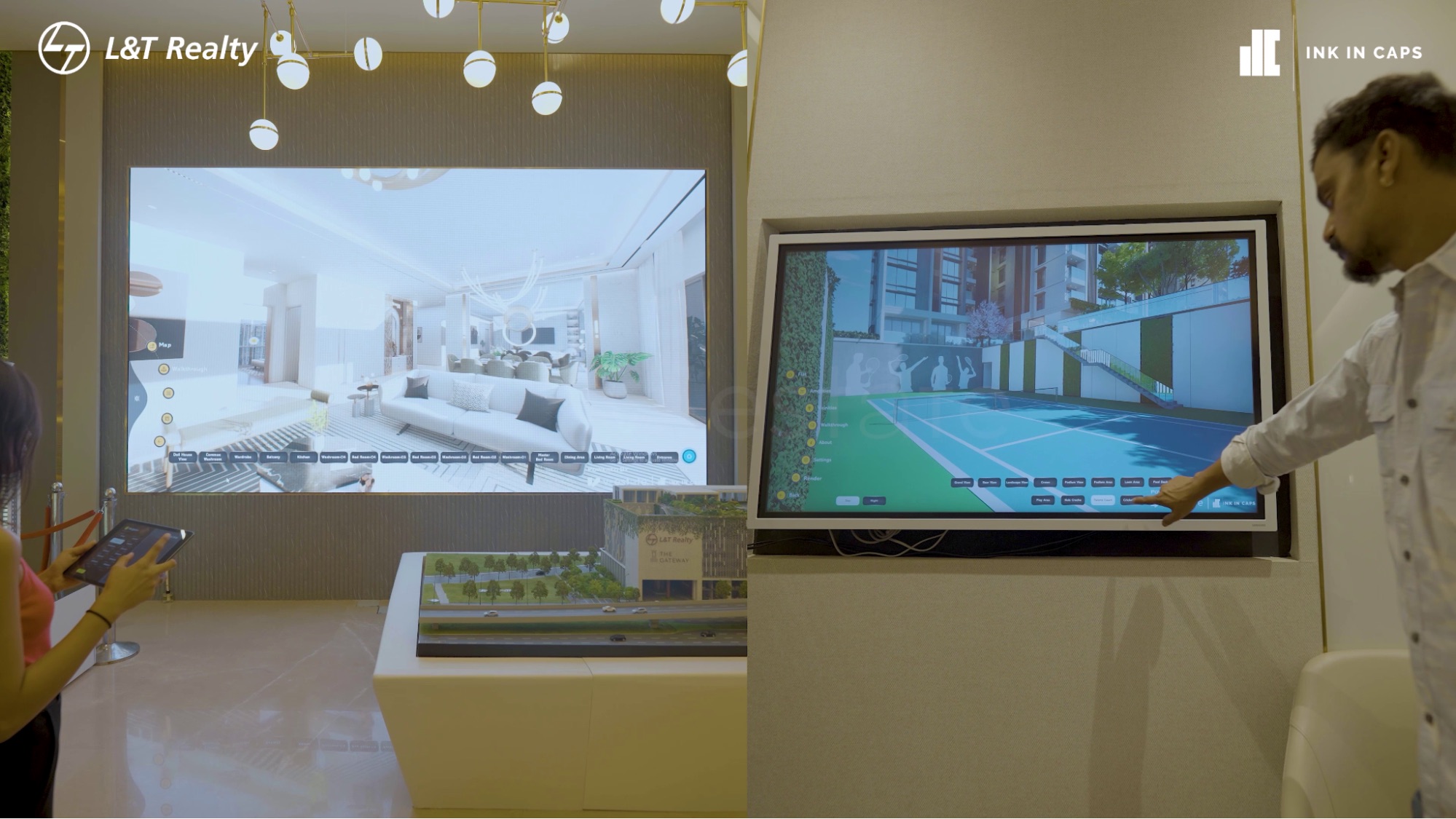
Paint swatches apply instantly. Neutral tones shift to bold accents. Buyers test color psychology within their actual space—how navy affects the bedroom's mood, how warm whites brighten a smaller living area. This removes customization uncertainty.
Furniture combinations render at scale. Sectional or sofa? Modern or traditional? Buyers visualize pieces against walls, windows, and architectural elements. They assess traffic flow and spatial harmony before committing to designs.
Window views adapt to customization selections. Curtain styles, blinds, transparency levels—each choice affects how outdoor scenery integrates into the interior. Buyers see finished results, not components.
Dynamic lighting and weather controls expand scenario testing. Dim settings simulate evening cinema experiences. Bright settings showcase morning breakfast comfort. Rain effects show how weather affects views. Seasonal golden hour light demonstrates seasonal variations. Dwell time increases 5x compared to video presentations because buyers actively shape their experience.
Amenity Mapping: Contextual Lifestyle Visualization
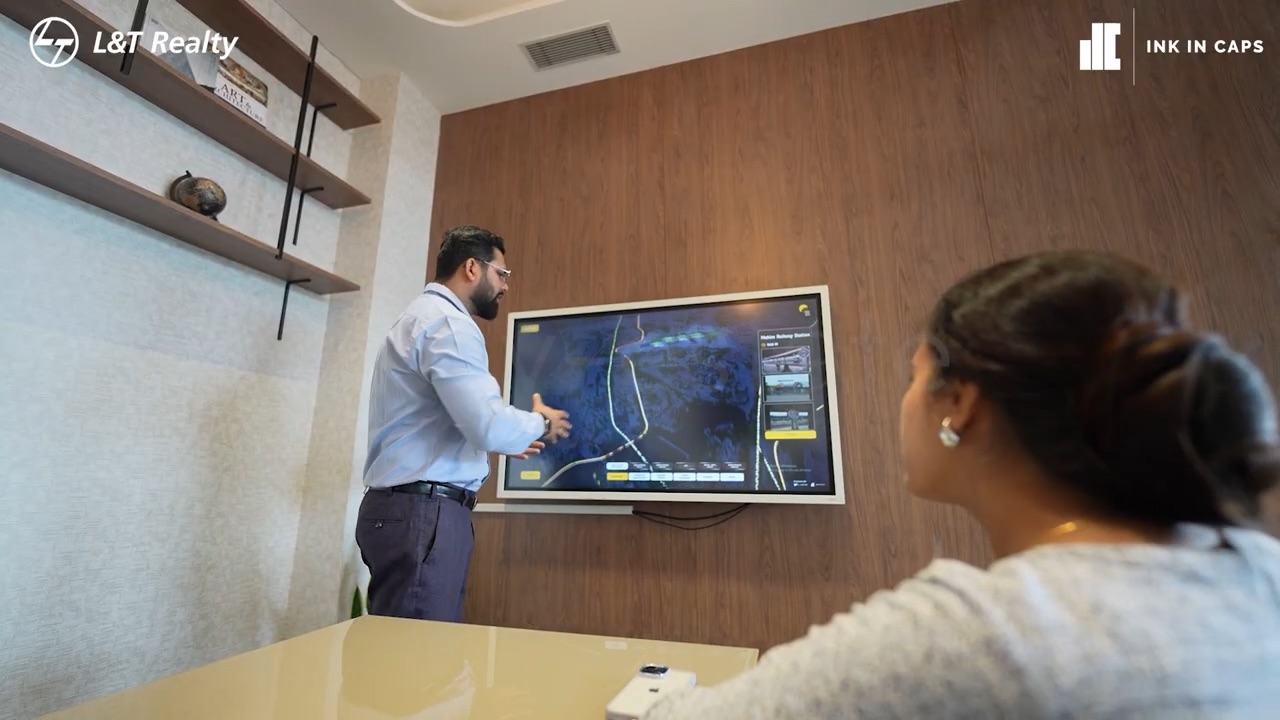
Properties exist within neighborhoods. V-Estate maps nearby facilities—schools, retail centers, transit hubs, healthcare facilities, parks. Current infrastructure appears alongside upcoming developments. Buyers understand actual connectivity, not developer promises.
Commute patterns render visually. Travel times to workplaces display spatially. Golf course proximity, restaurant clusters, entertainment districts—all mapped relative to the property. This grounds lifestyle benefits in geographic reality.
Lifestyle previews build decision confidence. A sea-view apartment shows actual commute routes, nearby amenities, and neighborhood character. Buyers assess whether location aligns with their daily patterns and priorities.
Offline Activation: Reliability Where It Matters
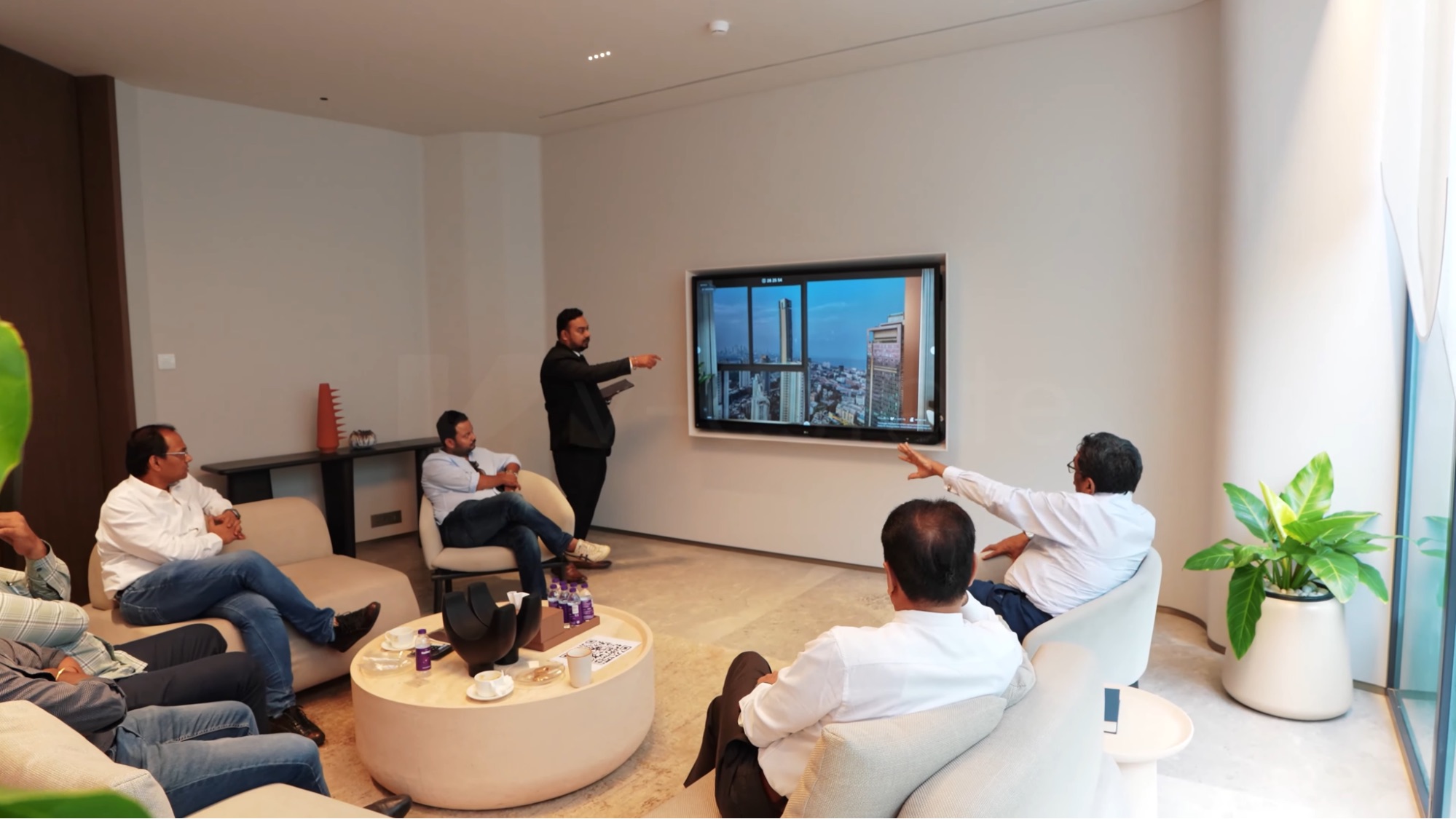
Download once. Deploy anywhere. V-Estate operates on tablets, kiosks, and standalone systems without internet connectivity. Pop-up events, remote showrooms, international exhibitions—all run flawlessly. No Wi-Fi barriers interrupt demonstrations.
Setup requires minutes, not hours. Technical complexity disappears. Sales teams activate V-Estate and guide buyers through properties immediately.
Data logs locally. Buyer interactions, customization preferences, unit views, engagement duration—all capture on-device. Later sync sends insights to CRM systems for follow-up analysis.
Cost reduction materializes quickly. Physical mockups become unnecessary. Site visit logistics shrink. One V-Estate unit serves 50+ daily interactions—impossible with traditional showroom models.
Lead Capture and Sales Acceleration
Buyers save their configurations. Custom render combinations, preferred units, amenity selections—saved locally for later review. Sharing occurs via QR codes to sales representatives. Follow-up conversations reference exact visualizations, not vague memories.
Conversion metrics improve measurably. 25% lift in conversions tracks directly to immersive customization engagement. Buyers commit when they own the visual outcome.
Marketing teams analyze engagement patterns. Which units generate extended interaction? Which customizations appear repeatedly? Popular combinations inform future inventory planning and pitch refinement.
Practical Integration Into Developer Operations
Export renders directly into CRM workflows. Marketing teams access buyer-created visualizations, linking customization data to prospect records.
Heatmaps identify engagement patterns. Kitchen areas, bedroom configurations, balcony views—track where buyers linger. This reveals high-interest features and informs sales messaging.
Deploy across entire portfolios. Update master property files. Sync across all showroom terminals. Centralized management scales to luxury towers, villas, mixed-use projects.