Buyers walk into your experience centre with doubts you cannot answer with a brochure.
"How much sunlight does this unit get in the morning?" "What does the view look like during monsoon?" "Will the balcony feel usable in summer afternoons?"
These are not unreasonable questions. They are the exact questions that stall decisions.
Traditional presentation tools were never built to answer them. That gap is costing developers real conversions — especially on premium inventory.
The Real Problem Sitting Inside Every Experience Centre
Static renders show one condition. One time of day. One season. One version of reality.
Buyers know this. They compensate by imagining. Imagination introduces doubt.
Doubt delays decisions.
The sales team then fills the gap with verbal explanations — describing sun direction, estimating heat exposure, guessing at view clarity. This creates longer meetings, repeated site visits, and objections that circle back.
The actual friction is not price. It is the absence of visual proof.
Simulation Removes the Guesswork
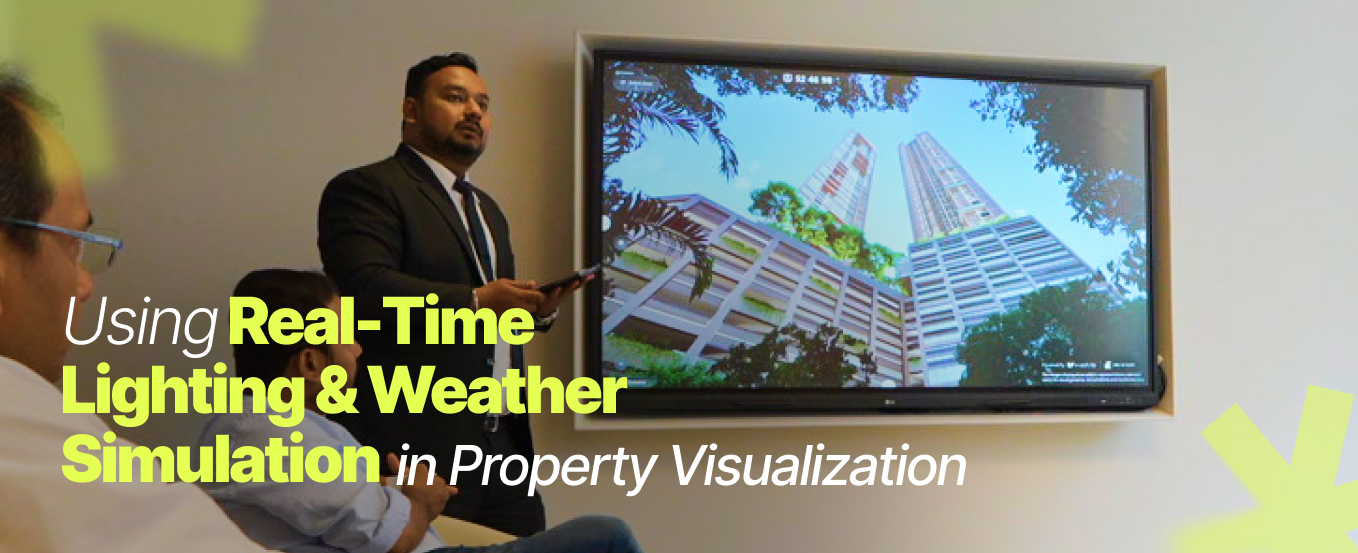
Real-time lighting and weather simulation gives buyers direct control over what they see.
They adjust the time of day. They toggle seasonal light. They apply a rain overlay or a haze condition. The unit responds instantly.
No preset videos. No scripted walkthroughs. Live, interactive exploration.
This fundamentally changes how buyers process a property.
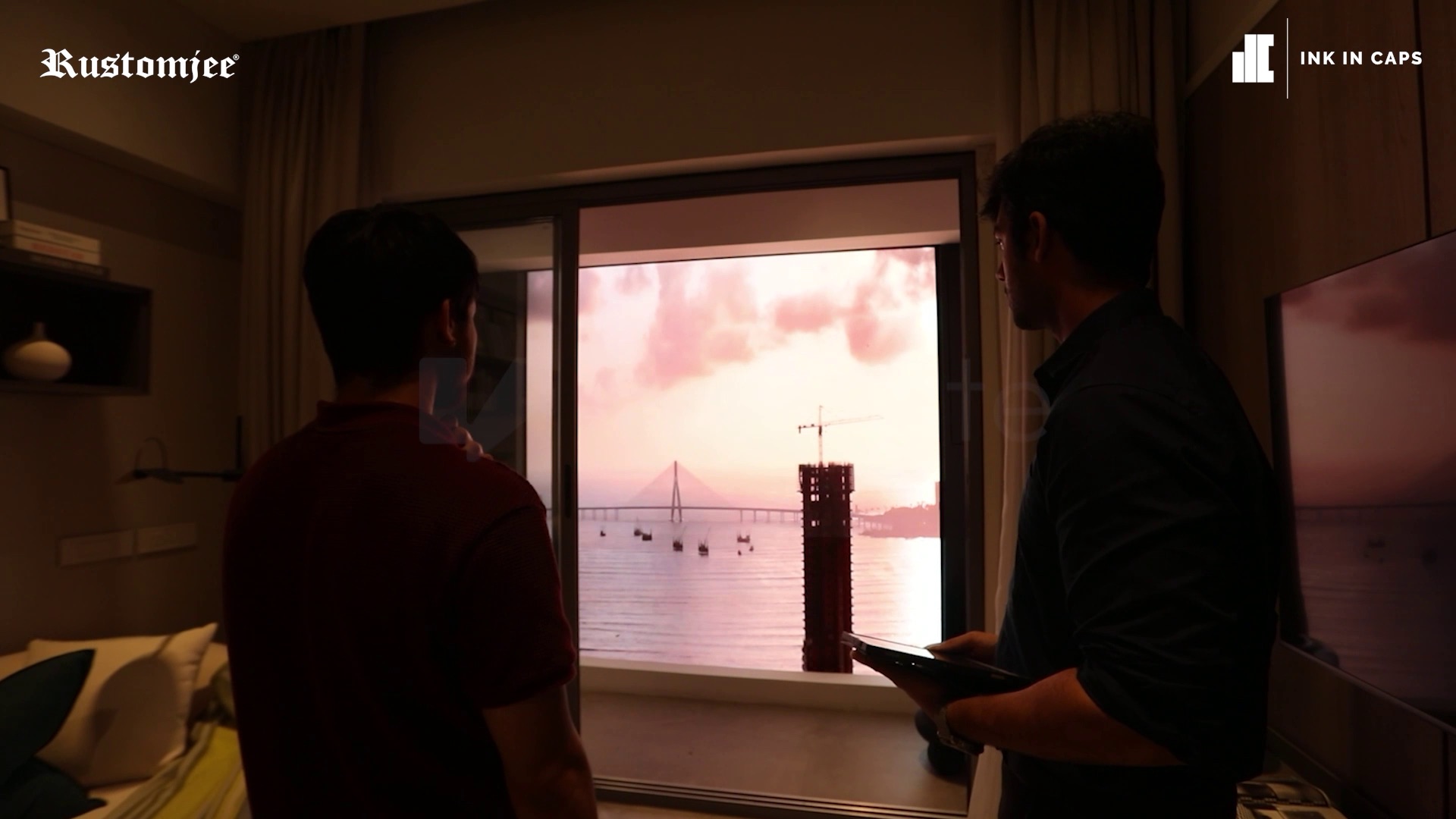
Instead of imagining morning light, they see it. Instead of asking about monsoon views, they experience it on screen — right there in your experience centre.
The question stops being "I wonder how it looks" and becomes "Yes, this is what I want."
What Changes on the Sales Floor
The shift is immediate and measurable.
Meetings become shorter. Verbal back-and-forth reduces because visual answers replace it.
Shortlisting accelerates. Buyers arrive at preferences faster when they can compare unit conditions side by side in real time.
Premium inventory moves more efficiently. Higher floors and view-facing units are easier to justify when the buyer can see exactly what they are paying for — across different times, different weather, different seasons.
Sales teams stop explaining. They start guiding.
That transition — from explanation to guidance — is where conversion improves.
The Runwal Raaya Experience Centre: A Reference Point
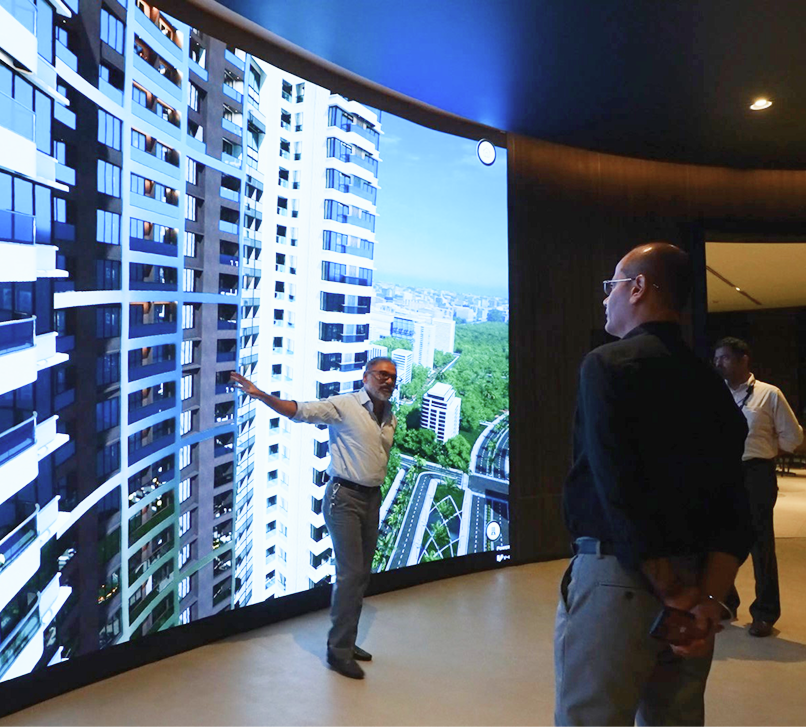
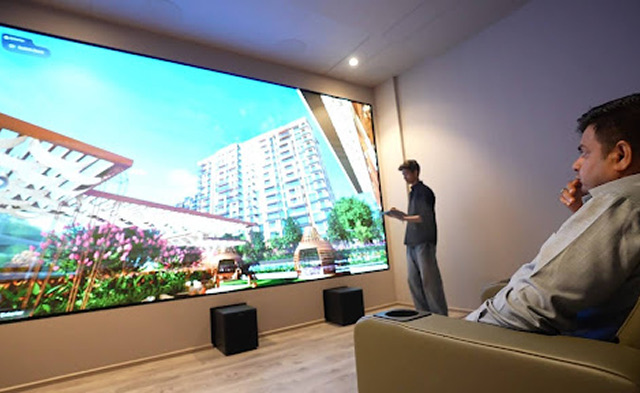
The implementation at Runwal Raaya's experience centre demonstrates what a structured simulation environment looks like in practice.
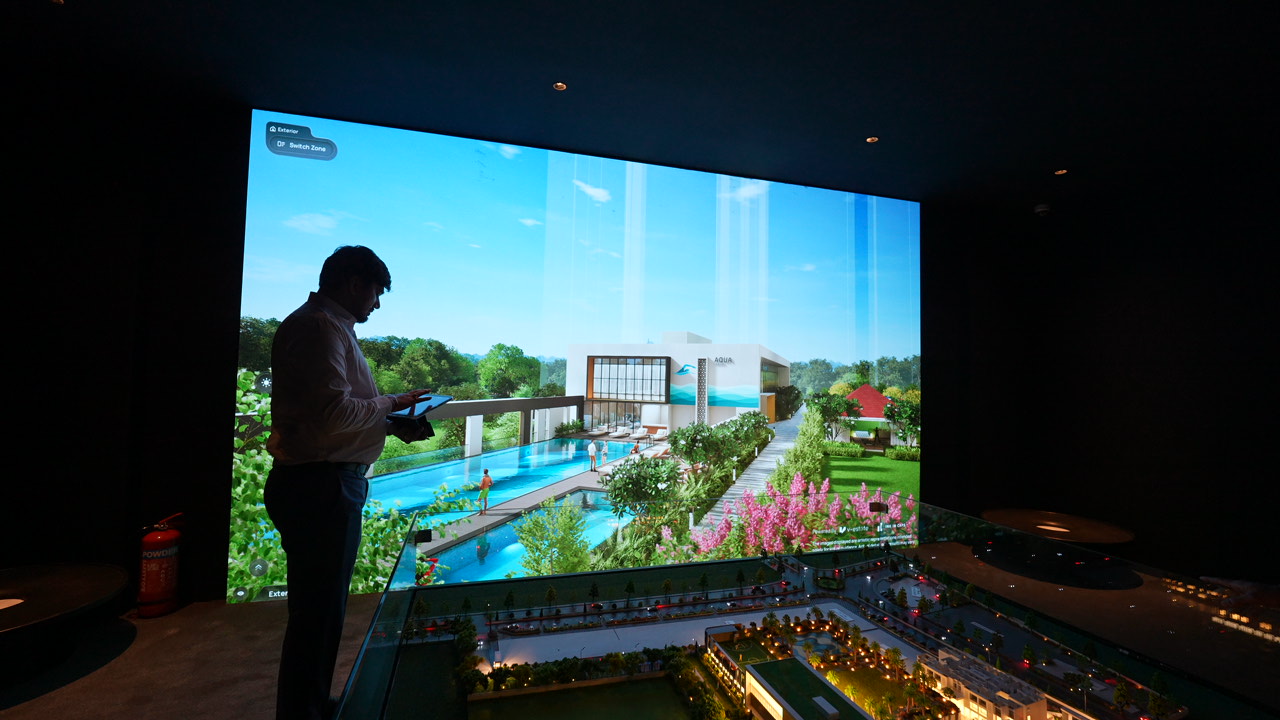
The setup included interactive display environments with controlled lighting logic, real-time weather toggles mapped to external views, unit-level navigation with accurate sunlight behaviour by floor, and seamless switching between interior and exterior perspectives.
Buyers did not watch a presentation. They operated the experience.
Sales conversations shortened. Questions became more specific. Decision confidence increased.
This is the model worth studying — not as a luxury feature, but as a functional sales infrastructure investment.
Content Accuracy Is Not Optional
Simulation only works when the underlying content is precise.
Inaccurate sun path mapping produces misleading results. Buyers notice. Credibility drops immediately.
The content layers that matter most:
Window placement aligned to actual architectural drawings
Floor height perspectives accurate to each unit level
Sun path calculated against the property's geographic coordinates
Shadow behaviour consistent with material surfaces
Weather conditions mapped to realistic visibility ranges
Approximation at any layer breaks trust. Precision at every layer builds it.
This is why simulation should not be treated as a creative exercise. It is a technical commitment to accuracy.
V-estate: Built for Experience Centres
V-estate operates as an offline interactive sales tool — purpose-built for controlled experience centre environments.
It is not an online platform. It runs on-site, on dedicated hardware, without dependency on internet connectivity or cloud rendering delays.
The system brings together photorealistic 3D virtual show flats, dynamic lighting and weather controls, customisation options for finishes and furniture, surrounding infrastructure mapping including upcoming developments, and detailed window view simulation across different times of day and year.
Everything the buyer needs to visualise their decision is available in one seamless session.
The result for developers: reduced repetitive conversations, stronger engagement with premium units, and buyers who leave with clarity rather than uncertainty.
For marketing teams: the experience centre becomes a controlled, differentiated environment — not just a display space.
What Developers Should Evaluate Before Implementation
Three areas determine whether simulation delivers results or just looks impressive:
Content quality. Poor asset accuracy will surface quickly during buyer interaction. Invest in precise 3D content before the simulation layer.
Hardware stability. Any lag or rendering delay during a buyer session breaks the experience. The infrastructure must support real-time response without failure.
Sales team alignment. Teams need to guide buyers through simulation purposefully. The tool supports the conversation — it does not run itself.
The Practical Next Step
Audit your current experience centre setup against one standard: Can a buyer answer their own questions without a sales team speaking for ten minutes?
If the answer is no, the visibility gap is active and it is affecting your conversion rate.
Real-time lighting and weather simulation is the structural fix — not an enhancement, not a visual upgrade, but a direct response to the most common reason buyers leave without deciding.
Map your current objections. Identify which ones are visibility-driven. Build the environment that removes them.
That is where V-estate fits, and that is where your experience centre becomes a genuine decision-making tool.