In India’s premium and luxury real estate market, the biggest barrier to conversion is no longer awareness or demand. It is uncertainty at the point of decision.
A typical high-value residential purchase involves multiple layers of evaluation: spatial planning, view corridors, natural light behavior, amenity usability, and long-term liveability. Yet, for decades, these decisions have been made using tools that only partially communicate reality. Static brochures, sample flats, and rendered images provide snapshots, not systems of understanding.
This gap directly impacts business performance.
Buyers extend decision timelines due to incomplete clarity
Sales teams spend disproportionate time resolving repetitive queries
Follow-ups increase, while conviction reduces
High-intent prospects delay closure despite strong interest
As real estate inventory becomes more design-led and capital-intensive, the inability to communicate architectural intent with precision becomes a measurable bottleneck.
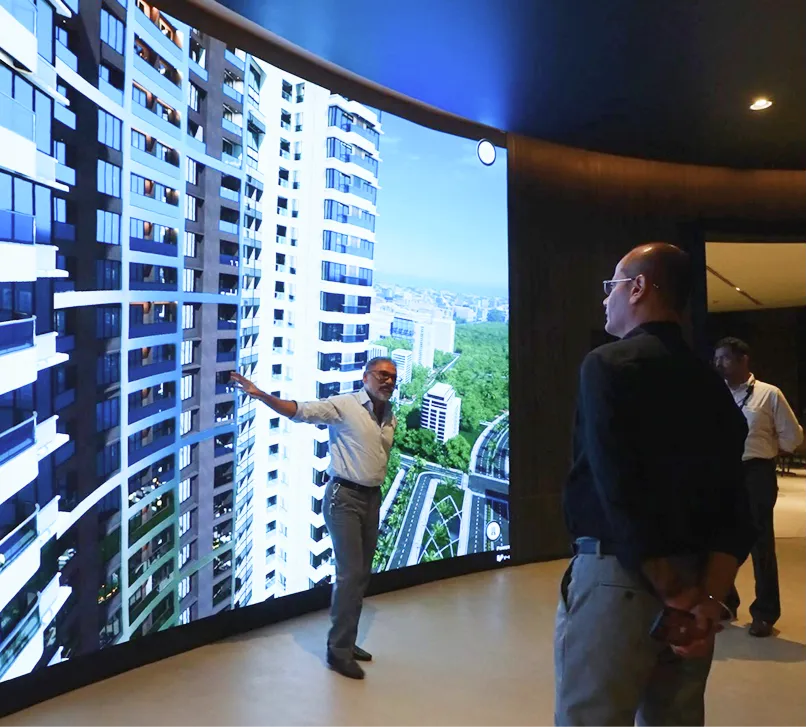
This is where 3D architectural visualization software is reshaping the industry. These systems convert architectural data into interactive, real-time digital environments, enabling buyers to evaluate every aspect of a project before it is built.
Platforms like Spaci by V-Estate operationalize this shift by creating live digital twins that allow users to navigate, analyze, and validate projects at a unit level with 4K precision and zero latency.
The outcome is not just better visualization. It is faster, more confident decision-making at scale.
The Core Bottleneck: Limited Visualization Reduces Sales Efficiency
A critical inefficiency in traditional real estate sales lies in the gap between architectural intent and buyer comprehension.
Static tools introduce limitations at multiple levels:
Buyers struggle to understand:
True spatial proportions beyond 2D plans
Floor-specific views and sightlines
Natural light behavior across different times of day
The scale and usability of amenities
The relationship between unit layouts and surroundings
This lack of clarity creates friction across the sales cycle:
Longer decision timelines
Increased dependency on repeated site visits
Higher follow-up requirements
Reduced confidence during final decision-making
Even high-quality developments with strong design narratives face challenges in communicating value effectively through conventional mediums.
This is precisely where 3D property visualization is redefining the sales process.
The Core Features of Spaci: An Advanced 3D Visualization Software
The transition to 3D visualization real estate software marks a shift from passive viewing to active exploration.
Advanced 3D visualizer software platforms operate on real-time rendering engines, often built on game-development frameworks such as Unreal Engine, to create highly responsive environments where users can navigate, interact, and analyse a project dynamically.
Spaci by V-Estate is engineered as a high-performance 3D architectural visualization software system, built on a multi-layered technical architecture:
Real-Time Rendering Core
4K output rendered at 60 FPS ensures fluid navigation without motion lag
High-polygon rendering pipeline capable of processing millions of triangles per frame
Nanite-based geometry optimization allows ultra-detailed assets without performance drops
Lighting and Environmental Simulation
Astronomical sun-path calculation based on project GPS coordinates
Real-time sunlight and shadow casting across interiors and exteriors
Dynamic transitions across sunrise, noon, and evening conditions
Accurate reflection and refraction behavior across materials
Panoramic View Intelligence
Drone-verified 360-degree panoramic data stitched into an interactive environment
Vertical coordinate mapping enables exact floor height simulation
Multi-tower and multi-orientation switching preserves real-world accuracy
Interior and Amenity Rendering Systems
Physically based rendering for materials, textures, and finishes
Real-time water simulation using fluid physics for pools and features
Human-scale foliage and environmental detailing for spatial realism
Interaction and Control Systems
Centralized iPad-based control interface for sales teams
Touch-enabled navigation across large LED walls and displays
Real-time switching between unit configurations and layouts
Instant Visualization Output
One-click export of high-resolution 4K renders
Personalized visual outputs for each buyer interaction
These capabilities transform 3D architectural visualization into a system that enables buyers to evaluate a project with measurable clarity rather than interpret it through abstraction.
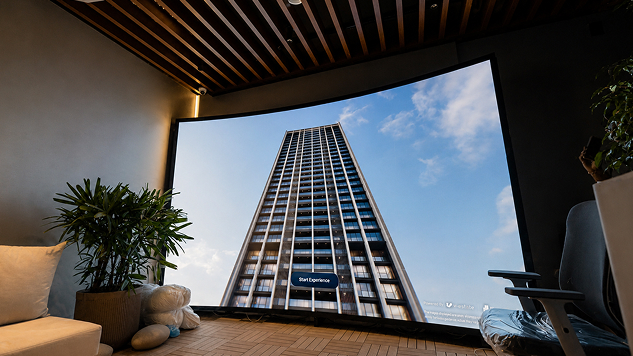
Case Study 1: Rustomjee 180 Bay View, Matunga
Structuring the Buyer Journey Through Spatial Technology
Rustomjee’s approach to Rustomjee 180 Bay View focused on building a structured, technology-led experience that enhances clarity at every stage of the buyer journey.
Experience Architecture
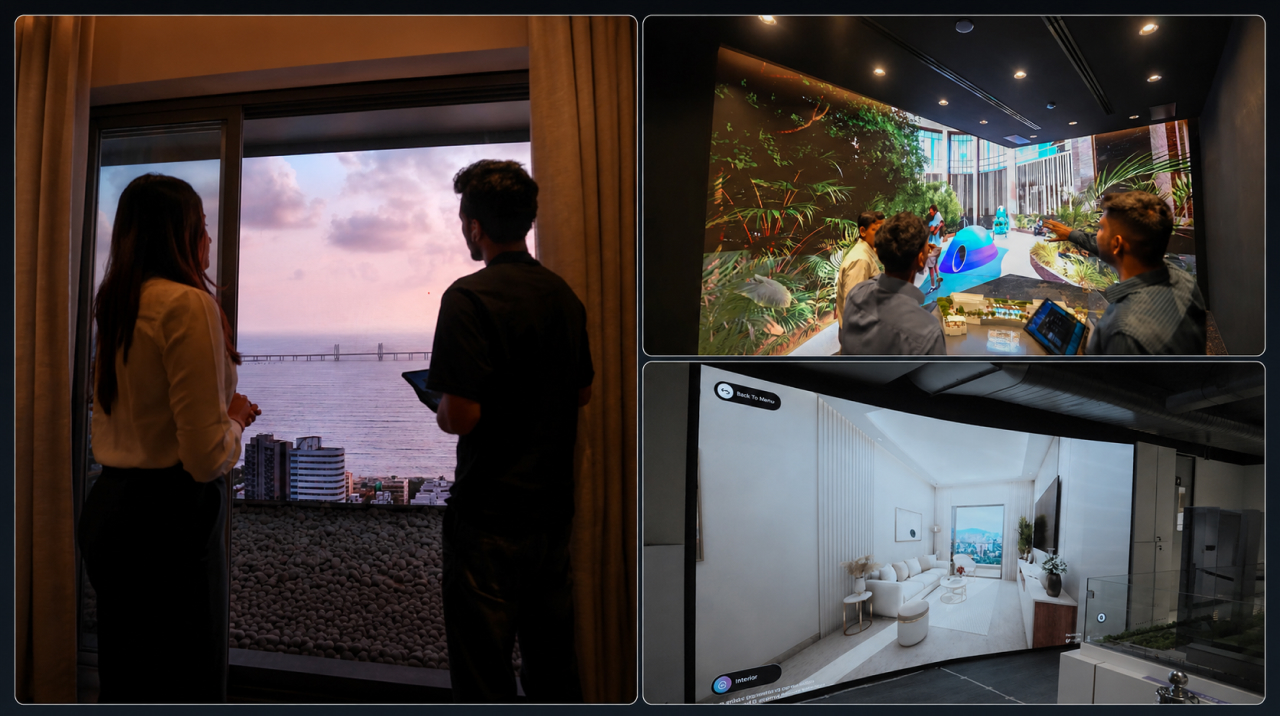
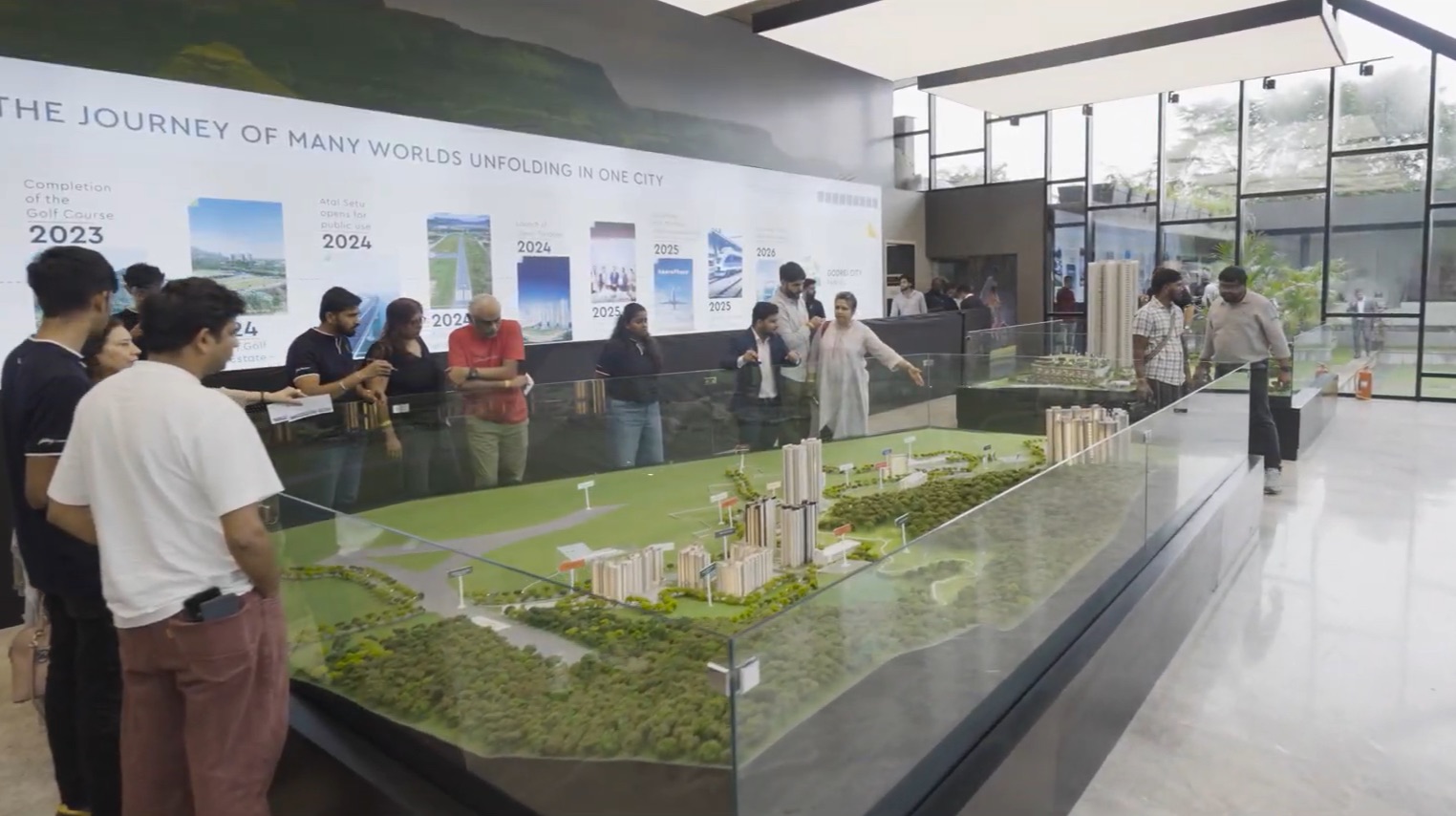
Zone 1: Curved LED with IoT-Enabled Scale Model A 20 ft by 10 ft curved LED panel integrated with a physical scale model enabled synchronized visualization. Buyers could understand tower placement, unit orientation, and view corridors through real-time interaction.
Zone 2: Immersive Amenities Visualization A 36 ft by 10 ft L-shaped LED wall displayed amenities at a 1:1 scale in 4K resolution. This allowed buyers to evaluate usability, scale, and spatial flow with accuracy.
Zone 3: Enhanced Sample Flat with Dynamic Window Views A 42 ft LED panel replaced static windows with real-time rendered views across different times of day, enabling buyers to assess natural light and horizon conditions.
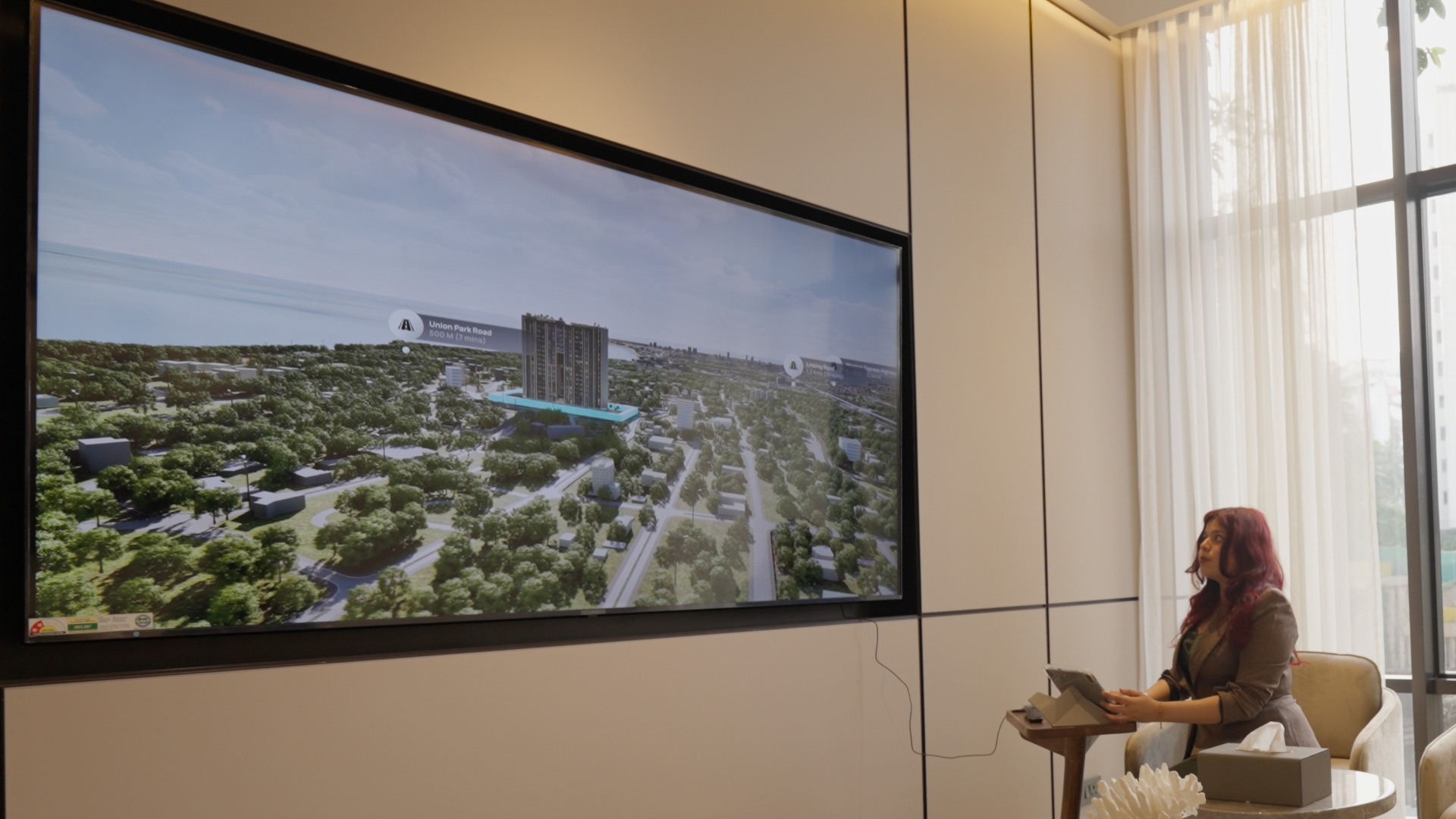
Zone 4: Smart Discussion Room A real-time visualization system enabled deep project exploration, including unit-level walkthroughs, amenity navigation, and vicinity mapping.
Measurable Outcomes
700 plus demos conducted within the first month
Engagement time increased from 20 minutes to over 50 minutes
75% reduction in printed marketing materials
Complete sale of all 4BHK units through virtual showcasing capabilities
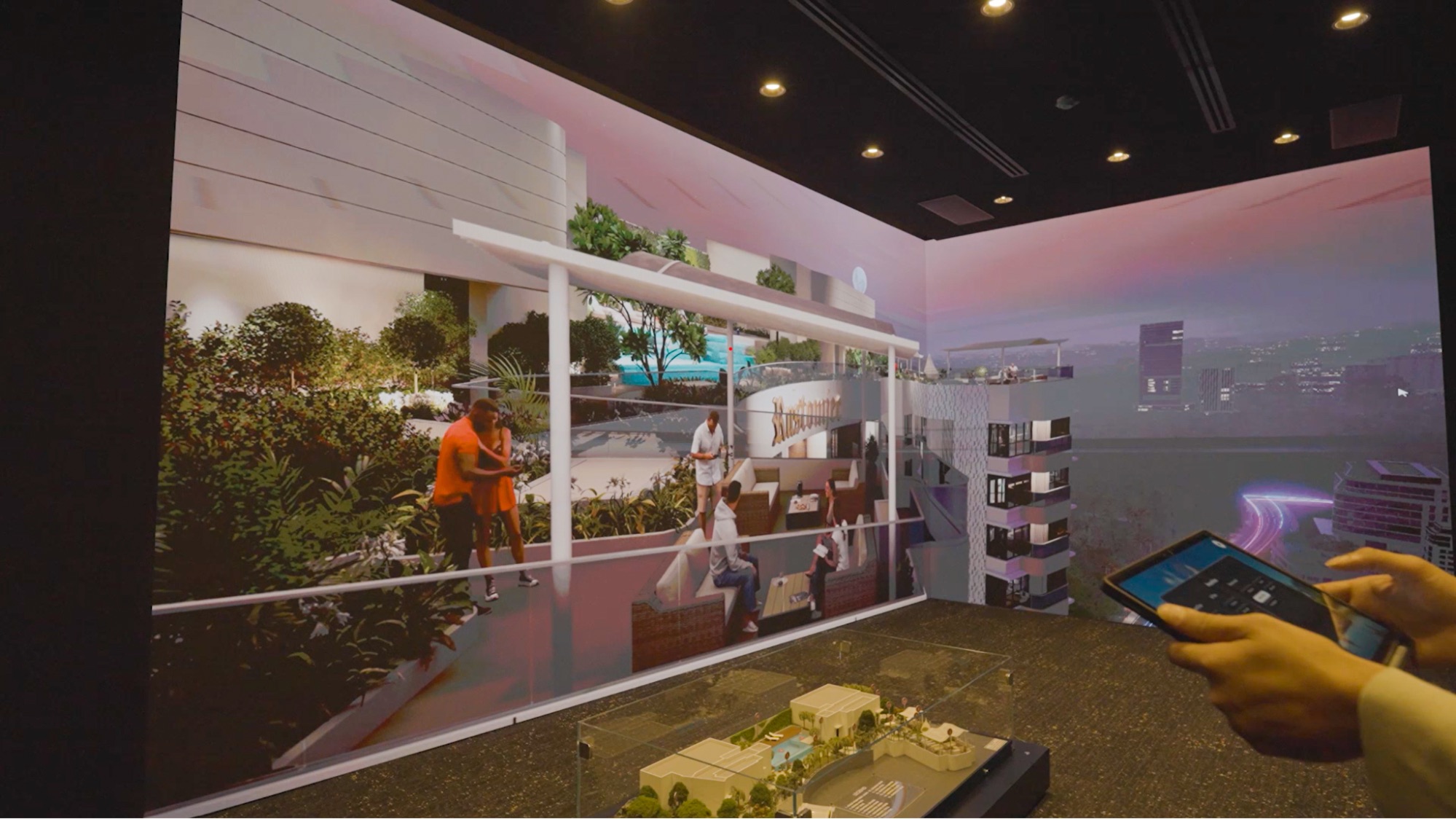
Case Study 2: Runwal Raaya, Worli
Translating Architectural Complexity into Buyer Clarity
Runwal Raaya required a visualization system capable of representing complex architectural, landscape, and material elements with precision.
Technical Implementation
IoT-Integrated Scale Model
Over 2000 addressable nodes embedded within the model
Real-time synchronization with digital selections
Real-Time Visualization Engine
Built on Unreal Engine 5.4
Lumen-based global illumination for realistic lighting
Nanite optimization for handling high-polygon environments
Interactive Floor Plan System
Dynamic zoom and navigation
Real-time switching between layouts
Motion Poster and Content System
Custom-built rendering loops
Seamless transitions without latency
Private Consultation Pods
65 inch and 85 inch 4K displays
Immersive audio integration
Personalized walkthrough environments
Results
Full adoption by the sales team
Improved clarity on layouts, views, and materials
Stronger engagement through immersive storytelling
Elevated brand positioning within the luxury segment
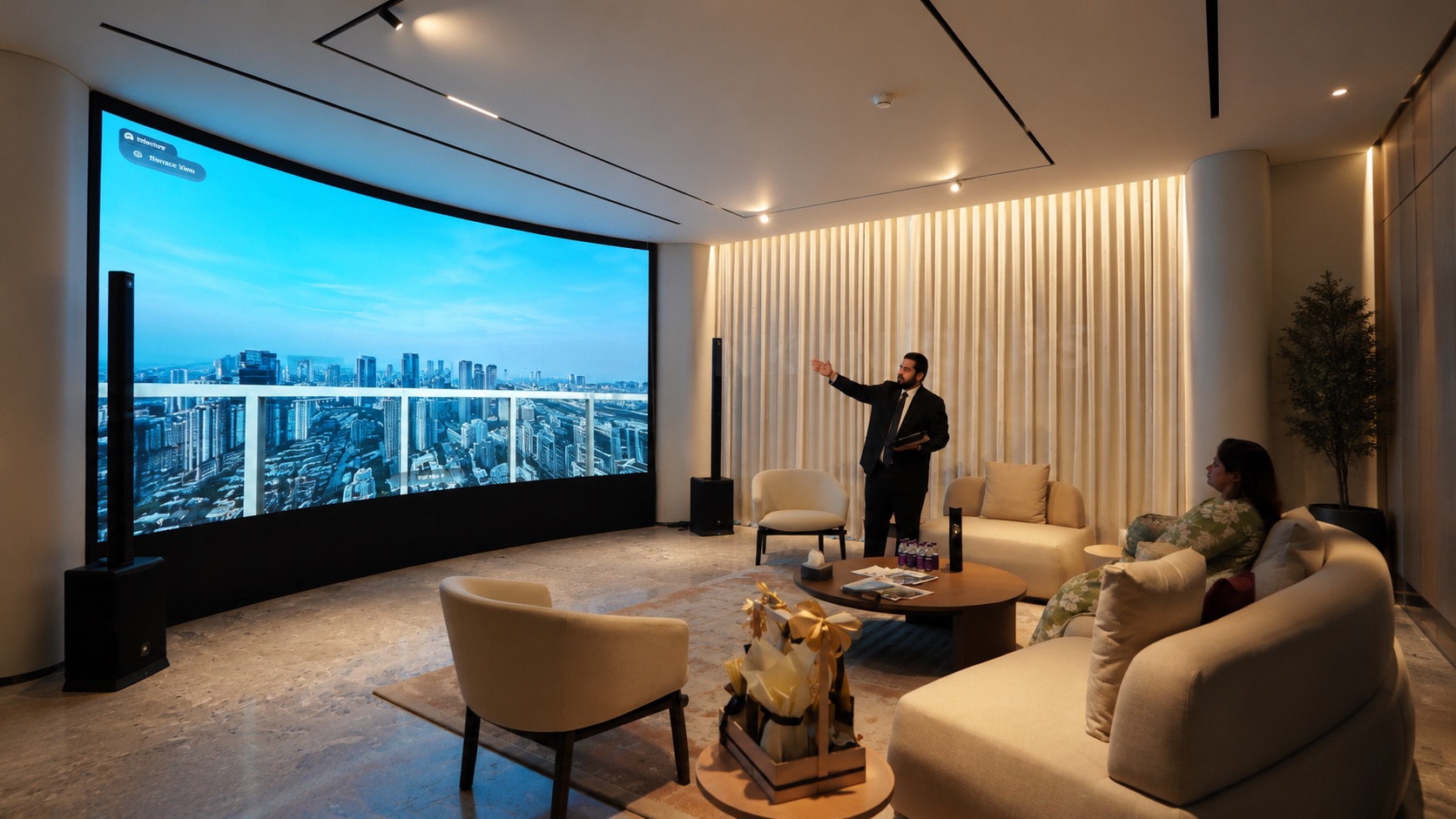
Case Study 3: Adani Realty Codename LIT, Thane
Driving Decision Confidence Through System Integration
Adani Realty implemented a structured visualization system to simplify a complex mixed-use development.
Core Technology Stack
IoT Physical Model Integration
38 interactive touchpoints
Real-time feedback through synchronized lighting
Unreal Engine 5.2 Visualization
Procedural modeling for infrastructure elements
Animated connectivity systems
Parallax Interior Rendering System
Simulated depth for glass façades
Reduced computational load while maintaining realism
Performance Optimization Framework
Nanite-based asset handling
Selective texture management
Optimized shader complexity
Results
Engagement time increased to 40 to 50 minutes
Buyers demonstrated higher technical understanding
Increased single-meeting closures
Complete adoption across the sales team
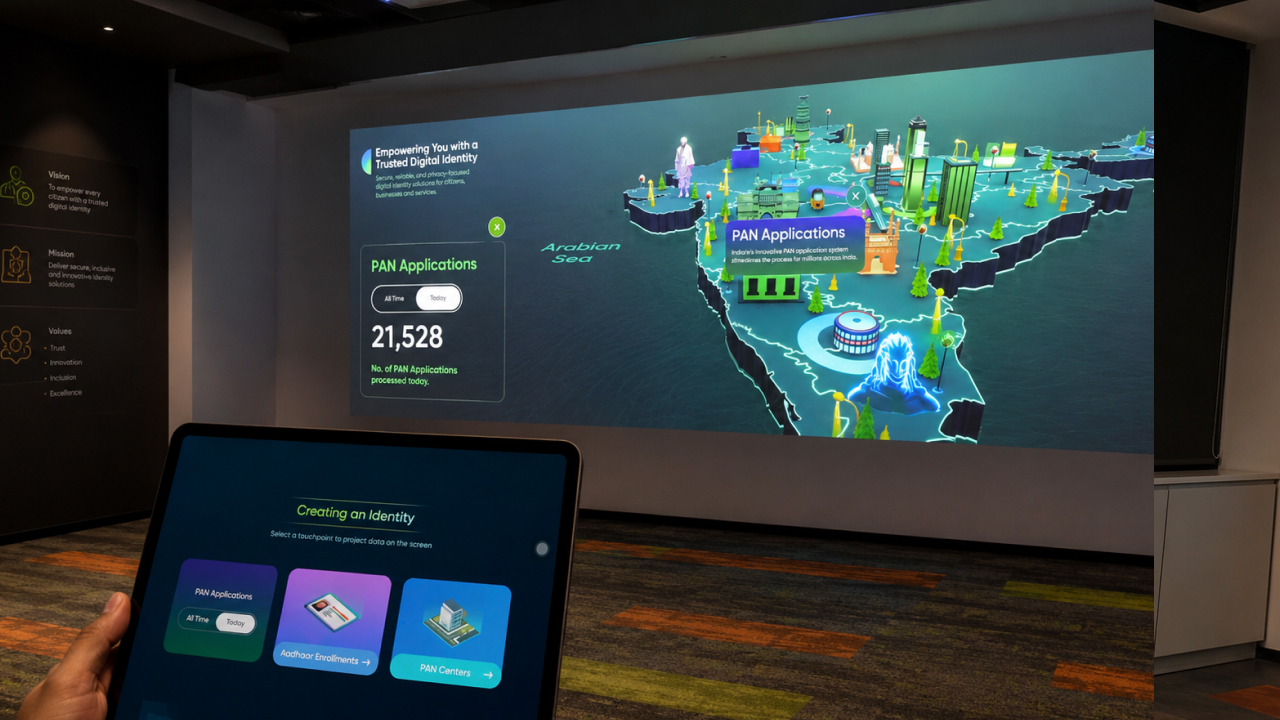
Spaci by V-Estate: The Technology Backbone of Modern Real Estate Sales
Spaci integrates multiple layers of 3D architectural visualization systems into a unified platform designed for high-performance sales environments.
Core Capabilities
Digital Twin Engine A real-time representation of the entire project, enabling navigation across all spatial layers.
Lighting Accuracy System Sun-path mapping based on geographic coordinates ensures realistic light behavior.
Panoramic Window View Engine Drone-based data integration enables accurate floor-wise and tower-wise view validation.
Interior Detailing Engine Micro-level interactions enhance realism and spatial understanding.
Advanced Interaction Modes Whiteboard customization, interactive triggers, and real-time walkthrough transitions.
Deployment Flexibility Compatible across LED walls, touchscreen displays, and mobile control interfaces.
Analytics and Data Layer Tracks engagement metrics and buyer behavior to optimize sales strategies.
Spaci in Numbers: Quantifiable Impact at Scale
The effectiveness of any 3D visualization real estate software lies in its ability to deliver measurable outcomes. Spaci has demonstrated consistent performance across multiple deployments:
7000 plus hours of daily demos conducted across projects
18,000 plus buyer journeys enhanced through interactive visualization
Average engagement time reaching up to 80 minutes in high-value projects
43+ sales galleries deployed across key real estate markets
These metrics highlight a critical shift. Visualization is no longer a supporting layer in sales. It is becoming the primary interface through which buyers engage with real estate.
Strategic Drivers Behind Adoption
Top developers are investing in 3D architectural visualization software due to direct business impact:
Faster Sales Cycles
Clear visualization reduces ambiguity and accelerates decision timelines.
Higher Conversion Efficiency
Buyers make decisions with stronger conviction when clarity is achieved early.
Standardized Sales Narratives
Technology ensures consistency across all customer interactions.
Reduced Marketing Overheads
Digital assets replace large volumes of physical collateral.
Stronger Brand Differentiation
Developers position themselves as innovation-led and transparency-driven.