.jpg)
Real estate businesses don’t fall behind overnight. They fall behind quietly—when buyers start deciding faster than sales systems can respond.
Today’s buyers evaluate projects long before they walk into a sales gallery. They compare options digitally, validate claims visually, and expect clarity without friction. When developers rely on static brochures, physical models, and explanation-heavy conversations, momentum breaks at the exact moment commitment should form.
Digital transformation in real estate is no longer about innovation optics. It is about decision velocity, buyer conviction, and commercial survival.
The Digital Imperative for Real Estate
The real estate industry is operating under a new set of buyer expectations. These expectations are no longer optional to meet.
Modern buyers:
Research independently before engaging sales teams
Expect immersive, on-demand exploration of properties
Want verification, not persuasion
Are comfortable making high-value decisions remotely
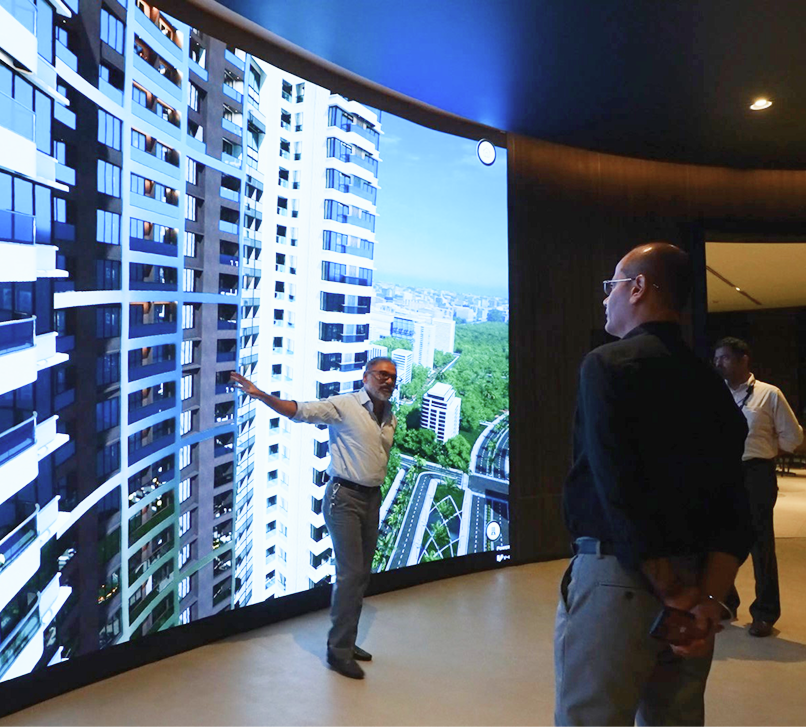
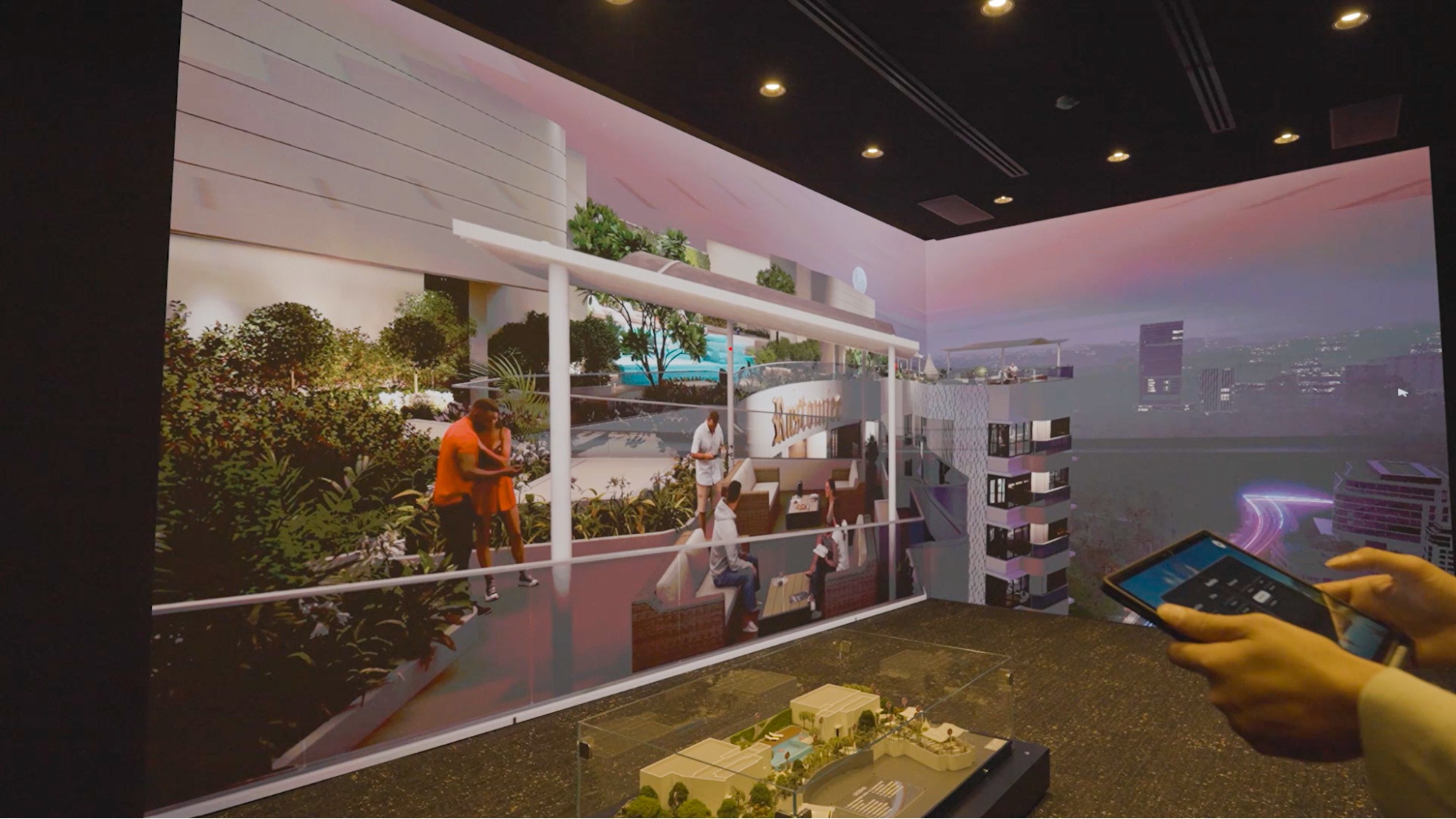
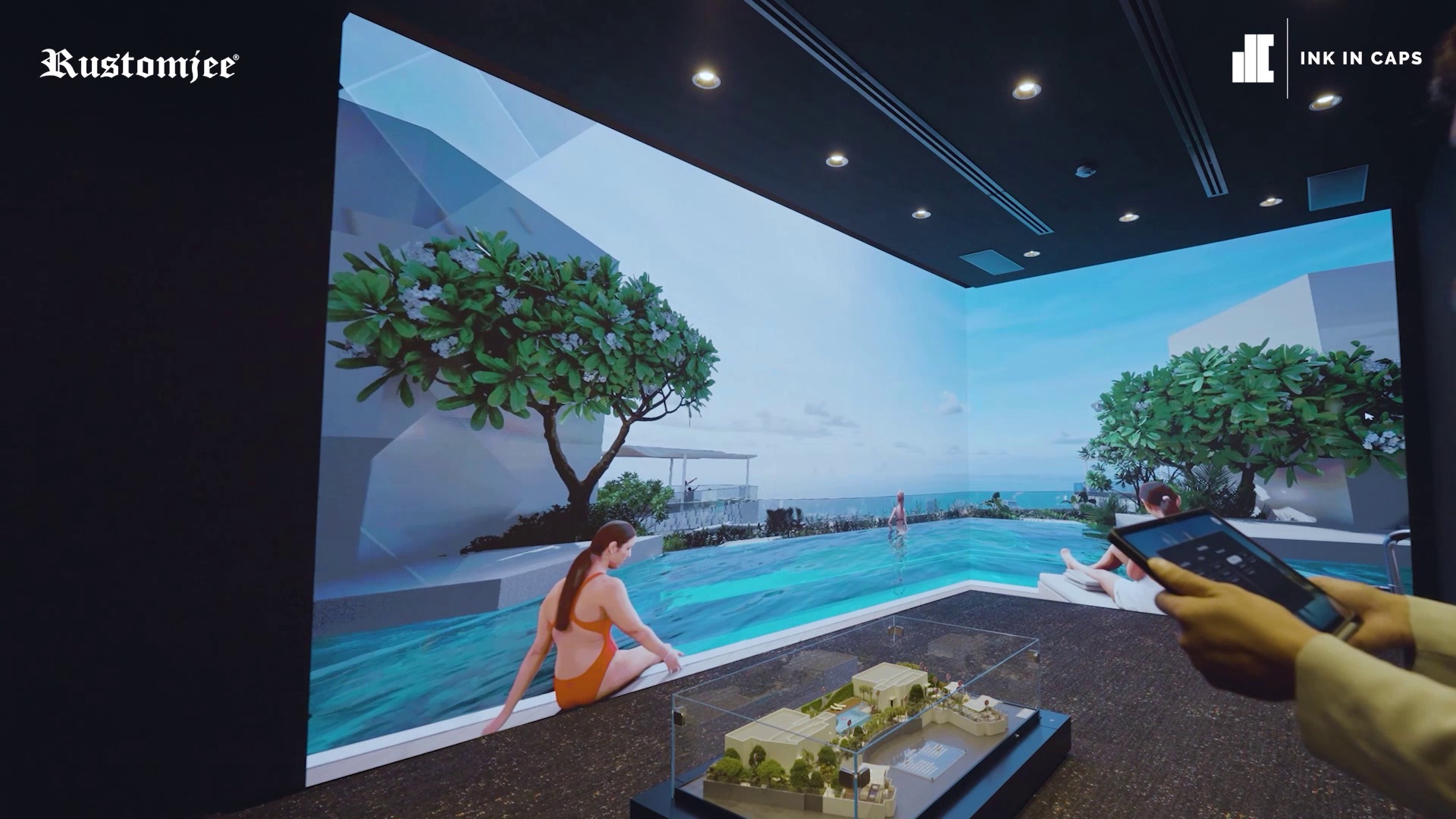
Projects like Rustomjee Urban Woods made this shift unavoidable. With over 200 families visiting daily and no physical construction to show, traditional sales tools failed instantly. Interactive, digital-first systems enabled buyers to understand layouts, views, and surroundings clearly—at scale.
The implication is clear. If your sales journey requires explanation to work, it will not scale.
The True Cost of Digital Hesitation
Delaying digital transformation does not preserve stability. It compounds risk.
Developers clinging to conventional methods absorb costs that rarely appear on balance sheets—but show up in outcomes.
Extended Sales Cycles
Without immersive visualization, buyers need multiple site visits and repeat discussions to resolve uncertainty. Decisions slow down. Inventory stays exposed longer.
Shrinking Market Reach
When competitors offer full virtual exploration, geography becomes irrelevant. Developers without digital systems are confined to local walk-ins, while others sell remotely.
At L&T Sewri, web-enabled interactive experiences allowed NRI and out-of-station buyers to evaluate the project without physical presence—without compromising clarity.
Conversion Drop-Offs
As buyer expectations rise, static marketing produces diminishing returns. Interest remains high. Closure weakens.
Brand Obsolescence
Digitally immature sales environments increasingly signal opacity. For younger and premium buyers, this erodes trust before negotiations even begin.
Digital hesitation does not delay change. It delays relevance.
Transformation Beyond Technology
Real digital transformation is not about adding tools. It is about restructuring how buyers move from curiosity to commitment.
Forward-thinking developers are redesigning sales journeys around buyer control, not sales control.
This shift enables buyers to:
Explore photorealistic properties at their own pace
Understand amenities and connectivity spatially
Visualize layouts, views, and finishes in real time
Evaluate decisions without physical travel
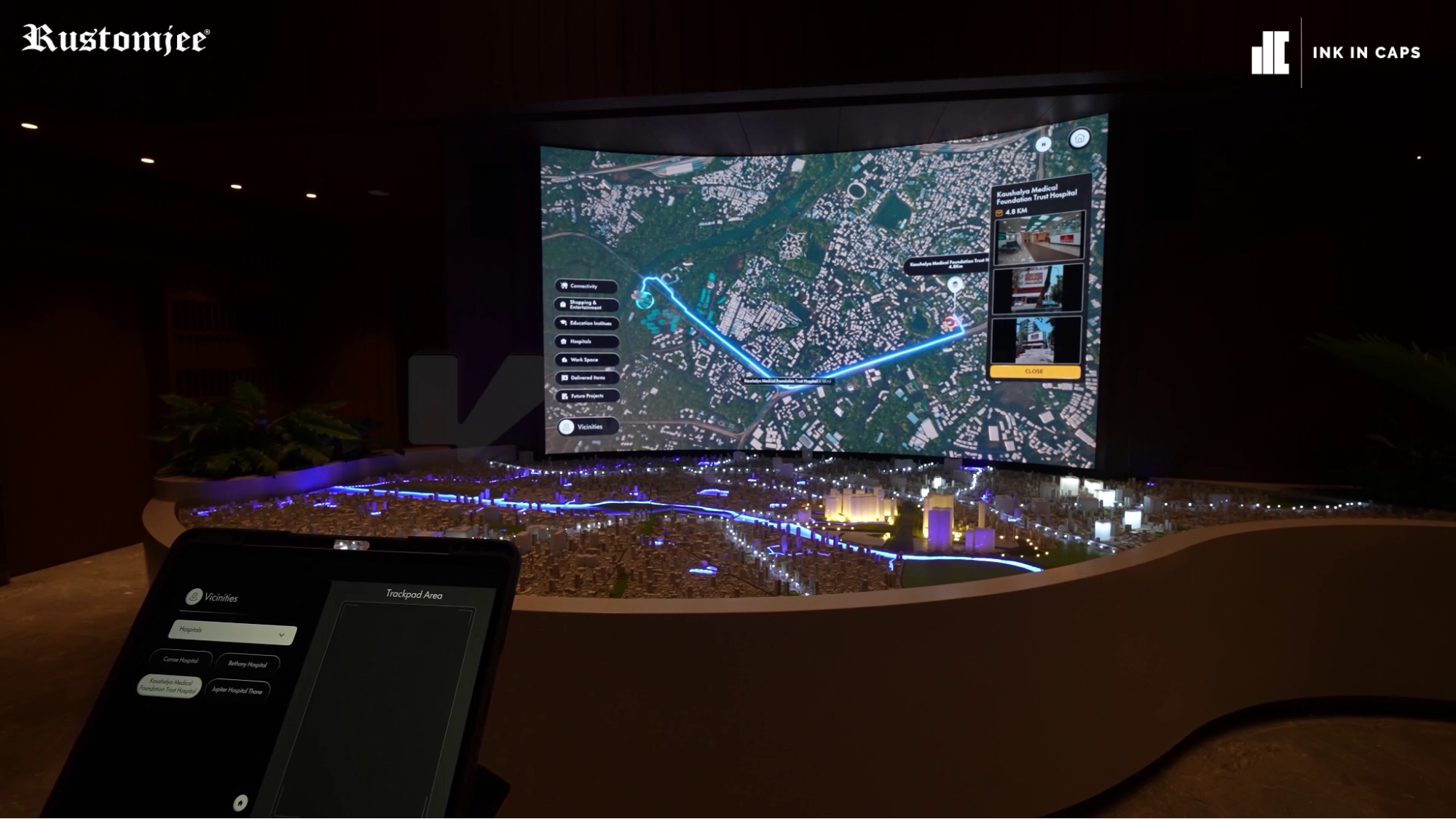
At L&T Mahim, buyers engaged with exteriors, amenities, interiors, and vicinity context through interactive systems—both on-site and remotely. Sales conversations moved faster because understanding arrived earlier.
This is the core transformation: From presentation → to exploration. From explanation → to visibility.
The Strategic Advantage of Virtual Experiences
Virtual and interactive experiences are not convenience upgrades. They solve structural sales problems.
Pre-Construction Sales at Full Clarity
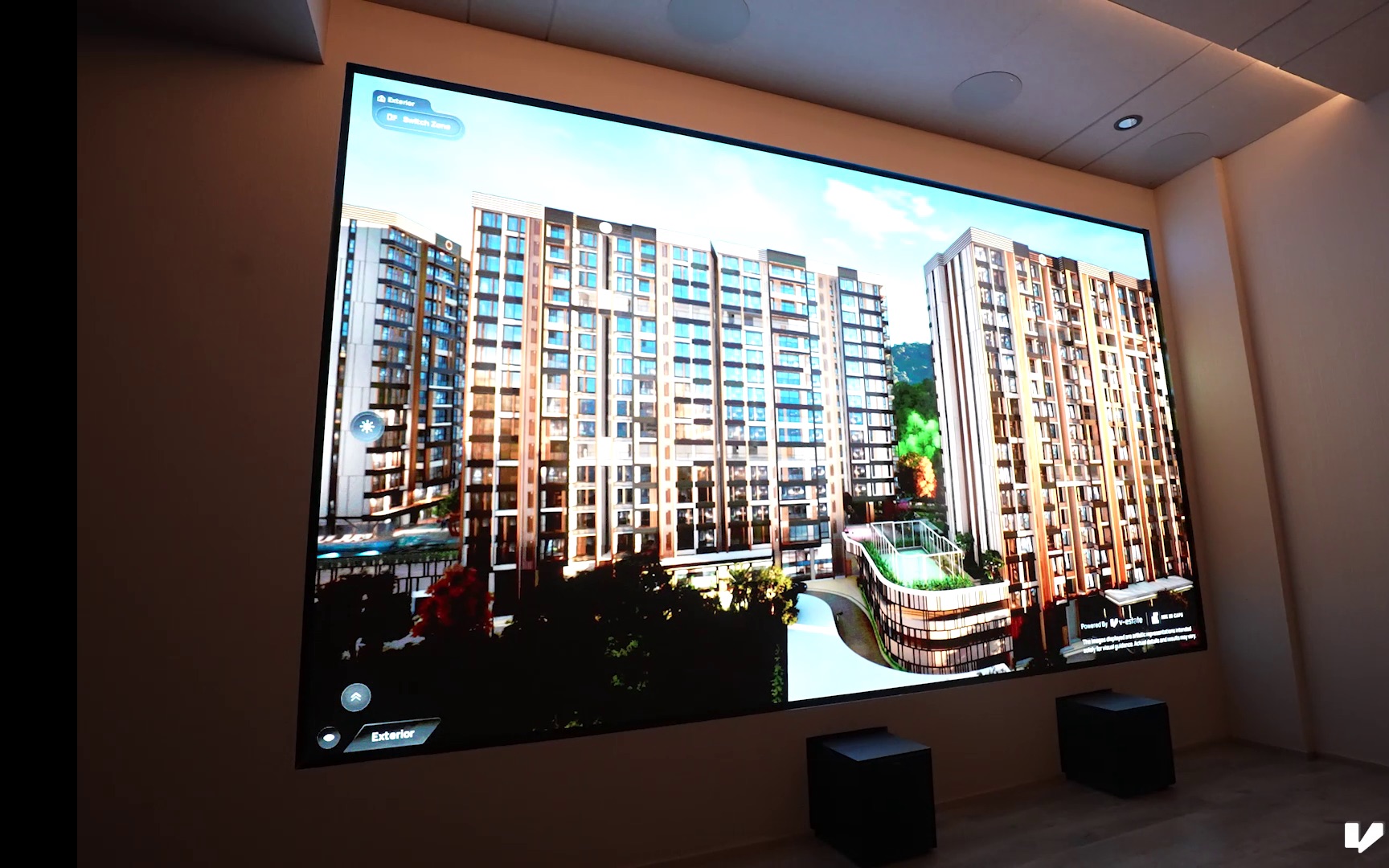
Digital twins and walkthroughs allow developers to sell confidently before ground is broken.
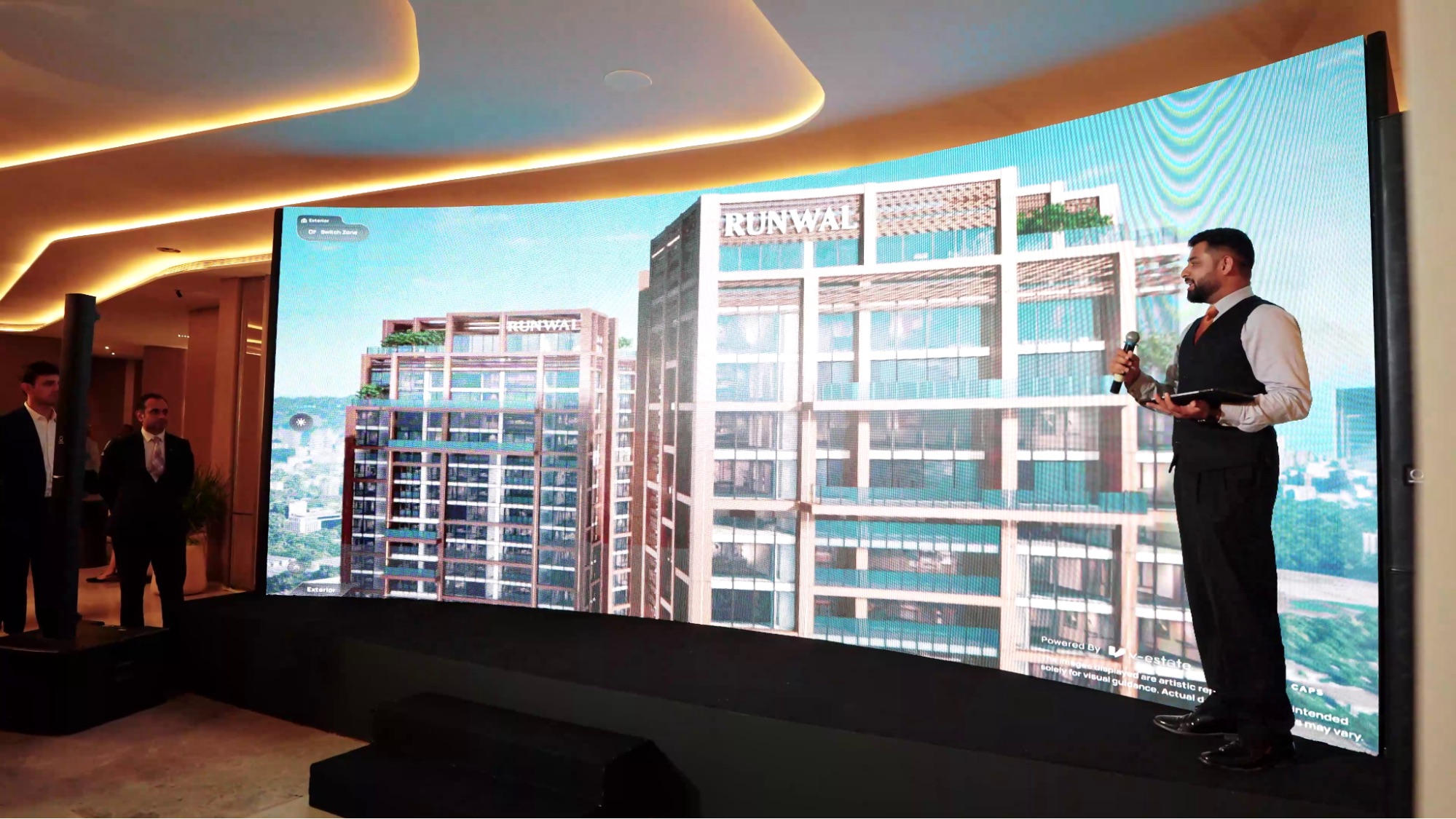
At Runwal Raaya, complex podium landscapes, offset towers, and dual landmark views were understood through immersive exploration—not brochures.

Customization Without Complexity
Customization often collapses under operational friction.
At Kalpataru Worli One, V-Estate’s Build Your Dream Home software allowed buyers to:
Reconfigure internal layouts live
Move or remove walls instantly
See spatial and lighting changes in real time
What normally takes weeks of architectural back-and-forth happened inside a single meeting. Customization became a decision accelerator.
Emotional Connection That Scales
Immersive systems create emotional alignment without pressure. Buyers feel ownership before possession—because they can see and experience outcomes clearly.
Global Buyer Access
Virtual experiences dissolve geography. Projects are no longer limited by physical proximity to the sales gallery.
Moving Forward: Essential Steps for Developers
Digital transformation works when it is deliberate.
Developers that succeed follow a clear progression:
Assess Digital Maturity: Identify where static tools create friction in the buyer journey.
Prioritize Buyer-Facing Systems: Focus on technologies that directly impact understanding and decision-making.
Enable Sales Teams Properly: Train teams to facilitate exploration, not deliver pitches.
Measure the Right Outcomes: Track time-to-decision, engagement depth, repeat visits, and conversion quality—not just lead volume.
Transformation is not a one-time deployment. It is a structural upgrade.
The Takeaway: Digital Transformation Is Now a Sales Strategy
Digital transformation in real estate is no longer about staying ahead. It is about staying viable.
Across projects—from affordable housing to ultra-luxury—the same pattern holds: when buyers understand sooner, decisions move faster. Interactive, digital-first sales systems remove ambiguity, reduce friction, and enable informed, convinced decisions.
Developers who delay this shift will manage leads efficiently but close slowly. Developers who embrace it will build resilience into every launch.
Reach out to us to create a digital sales experience that replaces static tools with clarity, scales buyer understanding, and drives informed decisions across every touchpoint.